
Building a Deck in Falmouth, MA: Permits, Coastal Weather and Design Ideas
· By Daniel Ferreira
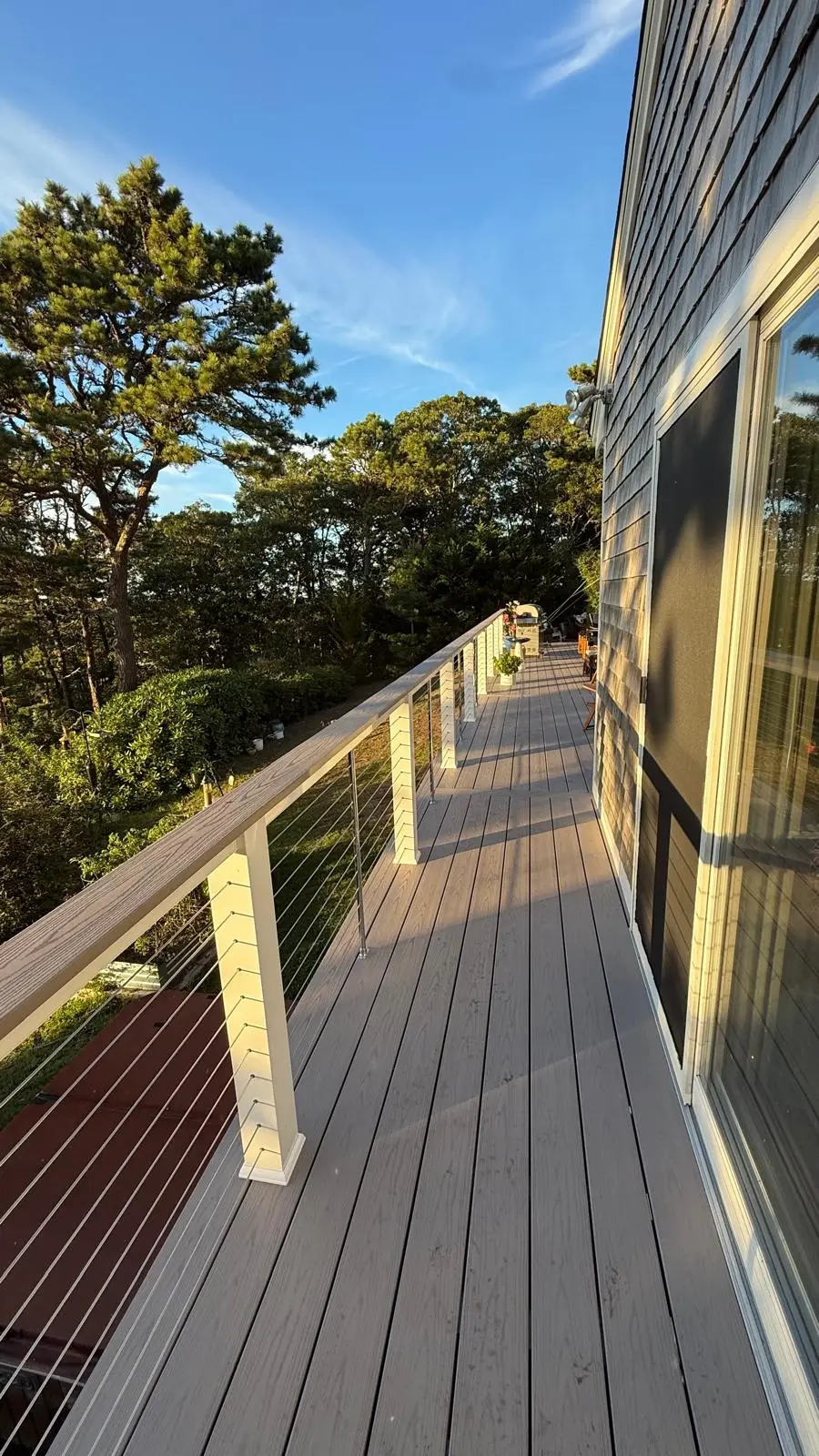
Falmouth sits at the southwest corner of Cape Cod, with Buzzards Bay on one side and Vineyard Sound on the other. Its villages include Woods Hole, Falmouth Village, West Falmouth, North Falmouth, East Falmouth, Waquoit, Teaticket and Hatchville, and between them there are miles of shoreline, salt ponds and inlets. Few towns on the Cape have so many homes so close to the water.
That makes Falmouth a great place for a deck and a demanding one. Wind, salt and winter storms test every part of the build. This guide explains what coastal weather does to a deck, which materials and railings make sense, how permits generally work in town and a few design ideas that fit Falmouth homes.
Two coastlines, two kinds of weather
Homes on the Buzzards Bay side, in West Falmouth and North Falmouth, often face strong southwest winds in summer and open exposure during storms. Homes on the Vineyard Sound side, from Woods Hole through Falmouth Heights to Waquoit, get steady salt spray and humid air. Inland neighborhoods in Hatchville and East Falmouth are more sheltered but still see the same snow and freeze cycles.
Knowing which side of town you are on helps shape the plan. A waterfront deck in Falmouth Heights needs more attention to hardware and railing strength than a backyard deck in a wooded part of Hatchville, even if they are the same size.
What salt air and wind do to a deck
Salt speeds up corrosion. Standard nails, screws and joist hangers can rust and weaken over a few seasons near the water, and the stains they leave are hard to remove. Wood that is not sealed regularly turns gray, checks and cracks. Wind adds stress on railings, posts and anything tall, such as a pergola or a privacy screen.
The answer is to build with coastal conditions in mind from the start: composite or capped decking that does not absorb water, vinyl or properly coated railing systems, and fasteners and connectors rated for exterior and coastal exposure. The framing underneath should be pressure-treated lumber, spaced and supported to the Massachusetts State Building Code, with footings below the frost line so the deck does not move in winter.
Railing choices for Falmouth views
If you are lucky enough to have a view of the water, a pond or the trees, the railing decides how much of it you keep. Cable railing has thin horizontal cables instead of balusters, so it keeps the view open. It is a strong option on decks facing the water or a wooded lot.
White vinyl railing remains the classic Cape choice and suits shingled homes in Woods Hole and Falmouth Village. Black balusters give a more modern look, especially on gray composite decks. Whatever you choose, railing height and spacing must meet code, and the posts need to be anchored solidly to the frame, which matters even more in a windy spot.
Snow, freeze and thaw: the winter side of Falmouth
Summer gets the attention, but winter decides how long a deck lasts. Falmouth sees nor'easters, heavy wet snow and repeated freeze and thaw cycles. Water that sits on framing or gets trapped behind a ledger board can rot wood over time. Footings that are too shallow can heave.
Good flashing where the deck meets the house, proper board spacing so water drains, and footings set deep enough are the details that protect the structure. Composite boards are easier to clear of snow, but use a plastic shovel to avoid scratching them.
Permits for a deck in Falmouth
Like other Massachusetts towns, Falmouth generally requires a building permit for new decks, rebuilds and structural changes, along with drawings and inspections. Because so much of the town is near wetlands, salt ponds or coastal banks, many waterfront properties also need an environmental review before construction. This can add time, so it is one more reason to plan early.
DFA Carpentry handles this part for you. Owner Daniel Ferreira personally manages all licenses and permits and builds to the state code. He holds an unrestricted Massachusetts Construction Supervisor License and a registered Home Improvement Contractor number, and he is OSHA certified.
Design ideas that fit Falmouth homes
For waterfront and near-water homes, a deck with cable railing, a wide set of stairs to the yard and a small outdoor shower by the path to the beach is a combination that works well. For family homes in North Falmouth or East Falmouth, a large composite deck with white railing, space for dining and a pergola over part of it gives shade during long summer afternoons.
Many Falmouth homes are rented in season, so durability and easy upkeep pay off. Planning in the fall or winter gives time for any environmental review and gets your deck finished before the summer traffic on Route 28 begins.
Frequently asked questions
- Do I need a permit to build a deck in Falmouth, MA?
- Generally, yes. New decks and structural rebuilds need a building permit and inspections, and properties near wetlands or the coast may need an additional environmental review. DFA Carpentry handles the permit process.
- What fasteners should be used on a coastal deck?
- Fasteners and connectors should be rated for exterior and coastal exposure so they resist salt corrosion. Standard hardware can rust and weaken near the water.
- Is cable railing a good choice in Falmouth?
- Yes, especially when you want to keep a view of the water or trees. It needs solid posts and correct tension, which is part of how we build it.
- How long does a deck project in Falmouth take?
- Construction itself is often a matter of weeks, but permits and any environmental review can add time. Starting in the fall or winter is the best way to be ready by summer.
- What railing color works best on a Falmouth deck?
- Many Falmouth homes have cedar shingles and white trim, so white vinyl railing is the most common match. Black balusters suit gray composite decks and more modern homes, while cable railing is the pick for water views. We can show samples during the free estimate so you can see them next to your house.
Related services
Serving
Ready for an exact price?
Get a free, no-pressure in-home estimate. Real numbers for your home, not a phone guess.