
How Much Does a Composite Deck Cost in Massachusetts? (2026 Guide)
· By Daniel Ferreira
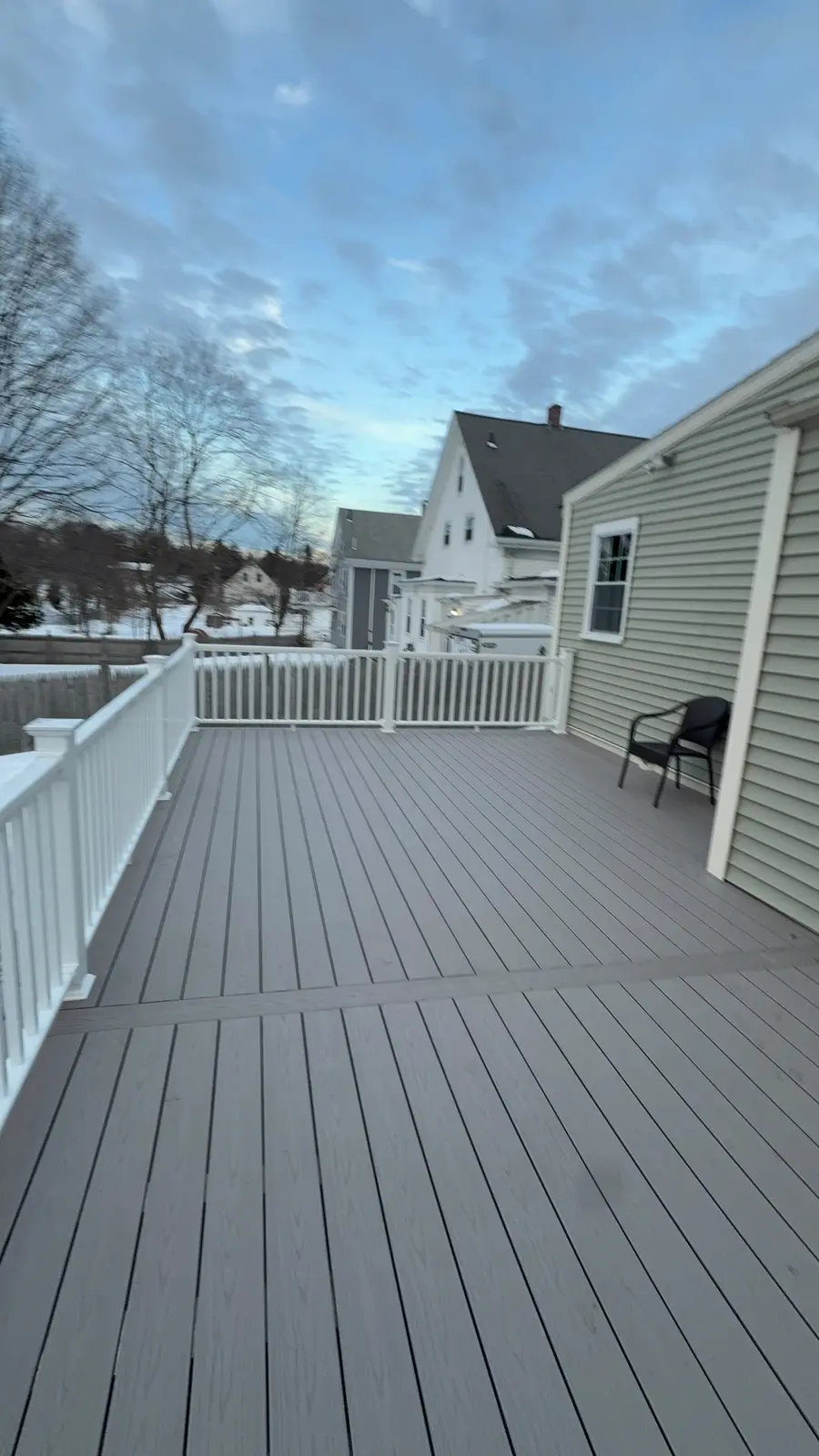
Composite decking is the most requested deck material on Cape Cod right now, and for good reason. It handles salt air, summer sun, and freeze and thaw cycles without the yearly staining and sealing that wood demands. The catch is the price: composite costs more up front, and the number on a quote can swing a lot from one project to the next.
This guide explains the price ranges most Massachusetts homeowners see in 2026, what actually drives the cost of a composite deck, where people overspend, and how to get an estimate that matches the final invoice. These are market ranges, not a quote. The only way to know your number is a site visit.
Typical composite deck price ranges in 2026
Across eastern Massachusetts and Cape Cod, most professionally built composite decks typically land somewhere around $45 to $90 per square foot installed. That figure includes the framing underneath, footings, the decking boards, basic railings, and labor. A simple, low, rectangular deck sits at the lower end. A second story deck with long stair runs, multiple levels, or premium boards sits at the upper end and can go beyond it.
To put that in real terms, a 12 by 20 foot deck (240 square feet) often falls somewhere between roughly $11,000 and $22,000, and a larger 400 square foot deck with stairs and railing on three sides can easily run past $30,000. These numbers move with material prices and the specifics of your yard, so treat them as a starting point for budgeting, not a promise.
Prices on the Cape also tend to run a bit higher than the national averages you see online. Labor is more expensive here, the building season is busy, and many homes need taller footings, longer stairs, or extra work to deal with sandy soil and slopes.
Board grade: the biggest material decision
Composite boards come in tiers. Entry level boards are capped on three sides and have a simpler color pattern. Mid tier boards add better scratch resistance and more realistic grain. Premium boards are fully capped, hold color longer in strong sun, stay cooler underfoot in some lines, and cost noticeably more per board.
On the Cape, where decks sit in full sun and near salt water, many homeowners find that a mid tier capped board is the sweet spot. It holds up well to UV and moisture without the premium price. If your deck faces south with no shade, or sits right on the water, the upper tiers can be worth it because fading and heat are more noticeable there.
Composite decking brands also carry their own manufacturer warranties on the boards. Read what each one actually covers (fading, staining, structural) because the terms differ from line to line.
What you cannot see still costs money: framing and footings
A composite surface still sits on a pressure-treated wood frame, and that frame is where a large share of the budget goes. The size of the joists, how close together they are spaced, the beams, the posts, and the number of footings all depend on the deck size and height. Composite boards often call for tighter joist spacing than wood, which means more lumber underneath.
Footings in Massachusetts have to go below the frost line so the deck does not heave in winter. On a tall deck or a sloped lot, that means more digging, more concrete, and longer posts. If the deck attaches to the house, the ledger connection needs proper flashing and fastening so water does not rot the rim of your home. None of this shows in photos, but it decides whether the deck lasts.
Railings, stairs, and extras that move the number
Railings are one of the biggest swing factors. White vinyl railing is the most common choice on Cape Cod homes and is usually the most budget friendly. Black aluminum balusters cost more, and cable railing is typically at the top of the range per linear foot. A deck with a lot of perimeter, or one high enough to need railing all the way around, adds up fast.
Stairs add cost by the step, and a second story deck can need a long run with a landing. Other common extras include fascia boards that hide the frame, picture frame borders, built-in benches, under-deck lighting, skirting or lattice, and gates for pools or pets. Each one is reasonable on its own, but together they can add thousands.
Permits, removal, and site conditions
Most decks in Massachusetts need a building permit, and the permit fee is set by your town. If an old deck has to be torn down and hauled away first, demolition and disposal add to the cost. Tight access to the backyard, ledge or roots where footings go, and homes near wetlands that need extra review can all add time and money.
At DFA Carpentry, Daniel Ferreira handles the permits personally and builds to the Massachusetts State Building Code. That matters for the budget too, because a deck that fails inspection or has to be rebuilt later is the most expensive deck there is.
How to get an estimate you can actually rely on
A good composite deck estimate is specific. It should name the board brand and line, the railing type, the number of stairs, the footing plan, and whether permits and removal are included. If two quotes look far apart, line them up item by item. Often one is quietly leaving out the railing, the permit, or the demolition.
Be careful with a price given over the phone before anyone has seen the yard. The height of the deck, the soil, and how it ties into the house change the framing, and the framing changes the price. A free on-site estimate is the fastest way to a number you can plan around.
Frequently asked questions
- Is composite decking worth the extra cost on Cape Cod?
- For most homeowners who plan to stay a while, yes. Composite costs more up front than pressure-treated wood, but it skips the yearly staining and sealing and resists rot and splinters, which matters in salt air. Over ten or more years the total cost often evens out.
- How much does a 12 by 16 composite deck cost in Massachusetts?
- A 12 by 16 deck is about 192 square feet. At typical market rates that often means somewhere around $9,000 to $17,000 installed, depending on height, railings, stairs, and board grade. A site visit is the only way to get a firm number.
- Can I put composite boards on my existing deck frame?
- Sometimes. If the frame is sound, the joists are spaced correctly for composite, and the ledger and footings are in good shape, resurfacing can save money. If the framing shows rot or was built without proper footings, it is safer to rebuild.
- Does the price include the permit?
- It depends on the contractor, so always ask. DFA Carpentry handles the permit process personally, and the estimate spells out what is included so there are no surprises later.
Related services
Ready for an exact price?
Get a free, no-pressure in-home estimate. Real numbers for your home, not a phone guess.