
Composite vs Pressure-Treated Wood Decking on Cape Cod: Which Holds Up to Salt Air?
· By Daniel Ferreira
Ask ten Cape Cod homeowners what their deck is made of and you will hear two answers more than any other: composite or pressure-treated pine. Both are common here, both can last, and both have a real place depending on your budget and how much upkeep you are willing to do.
The coastal climate is what makes this choice different from the rest of the country. Salt air, fog, strong summer sun, sandy soil, and hard winters all work on a deck at the same time. This guide compares the two materials on the things that actually matter here: cost, maintenance, durability, comfort, and resale.
The short answer
Pressure-treated wood costs less up front and is easy to repair, but it needs regular cleaning and sealing to look good and avoid splitting. Composite costs more on day one, but it does not need stain, does not splinter, and resists rot and mildew far better in a damp coastal climate.
If you want the lowest first cost and do not mind a weekend of maintenance every year or two, pressure-treated can be a smart choice. If you want to spend summers on the deck instead of working on it, composite usually wins over the long run.
Up front cost
On a typical project in Massachusetts, a pressure-treated deck often costs somewhere around half to two thirds of the same deck in composite. Market ranges for pressure-treated decks commonly sit around $25 to $50 per square foot installed, while composite often runs about $45 to $90 per square foot. Height, stairs, railings, and site work push both numbers up or down.
Keep in mind that the frame underneath is pressure-treated wood either way. The difference in price comes mostly from the surface boards, the fascia, and the railing system you pair with them.
Maintenance in salt air
Pressure-treated pine needs care to last on the Cape. Plan on washing it every year and applying a penetrating stain or sealer every one to three years, depending on sun exposure. Skip it and the boards gray, check, cup, and grow mildew in shaded spots. Fasteners can also rust if they are not rated for treated lumber and coastal use.
Composite needs a cleaning once or twice a year to remove pollen, mildew, and grime, and that is usually it. No stain, no sealer, no sanding. Capped composite boards also shrug off the salt film that settles on everything near the water. For second homes and rentals, where nobody wants to spend vacation days sealing a deck, this is often the deciding factor.
Durability, rot, and lifespan
A well built and well maintained pressure-treated deck can last 15 to 20 years or more. Without maintenance it can start to rot, especially where boards stay wet, near the ground, or under planters. Splinters and raised nails become an issue over time, which matters if kids or bare feet are on it every day.
Quality composite boards are designed to last decades and do not rot, split, or splinter. Many composite decking brands back their boards with long manufacturer warranties. Remember that the lifespan of any deck is only as good as its frame, footings, and ledger. A composite surface on a poorly built frame will not last any longer than wood.
Comfort, heat, and looks
Wood stays cooler under bare feet in full sun, and many people love the natural look of fresh lumber. Over time, untreated pine fades to gray, which some homeowners like on a weathered Cape house and others do not.
Composite comes in many colors and grain patterns that stay consistent for years. Darker composite colors can get hot in direct July sun, so on a south facing deck with no shade, lighter colors or boards marketed as heat resistant are worth considering. Gray composite with white vinyl railing is one of the most common combinations on Cape Cod homes because it suits the shingle style so well.
Coastal details that matter with either material
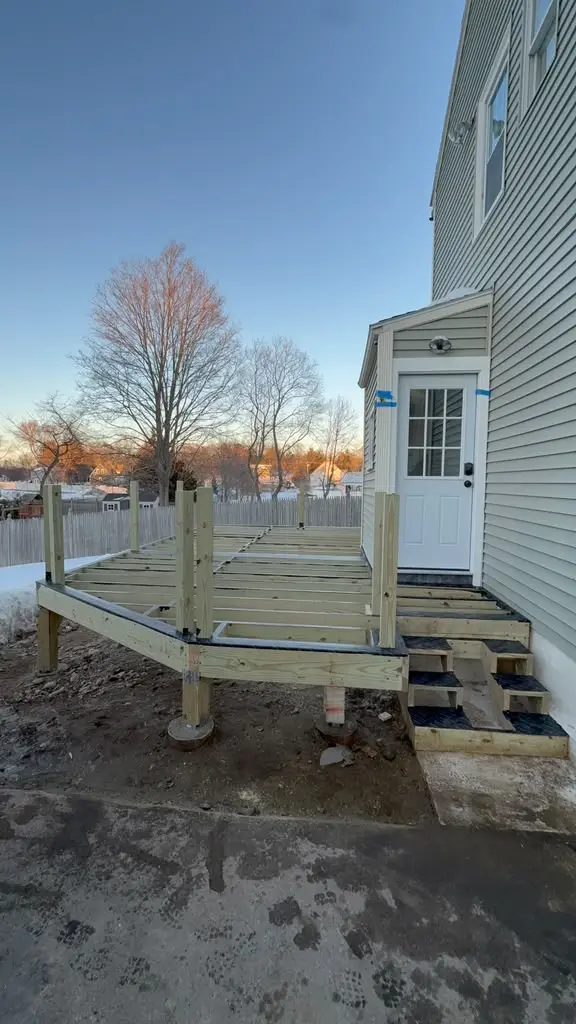
Whichever surface you choose, a few details decide how well a deck survives near the ocean. Fasteners and connectors should be rated for treated lumber and coastal exposure, such as hot dipped galvanized or stainless steel, because ordinary hardware can rust out years before the wood does. Joist tape on top of the framing helps shed water from the tops of the joists, where rot often starts under the boards.
Airflow under the deck matters too. A deck built tight to the ground with no ventilation traps moisture, which shortens the life of wood boards and the frame under composite alike. Proper gapping between boards, enough clearance below, and good drainage around the footings all help. These are the kinds of details worth asking about on any estimate, because they rarely show up in the price comparison but show up clearly ten years later.
Which one fits your home
Pressure-treated tends to make sense for a budget build, a deck you plan to replace or expand in a few years, a ground level platform, or a homeowner who enjoys maintenance. Composite tends to make sense for a primary home you plan to keep, a rental or second home, a pool deck, a deck in full sun or near the water, and anyone who would rather not stain.
Some homeowners split the difference: composite on the deck surface and stairs where wear is highest, with a simpler railing to manage the budget. On a site visit, DFA Carpentry can price both materials for the same layout so you can compare real numbers side by side.
Frequently asked questions
- Does composite decking get slippery?
- Composite boards have textured surfaces and many lines are rated for slip resistance. Like any deck, they can be slick with ice, wet leaves, or algae, so regular cleaning helps, especially on shaded decks near the water.
- How often do I need to seal a pressure-treated deck on Cape Cod?
- Most decks here need a cleaning every year and a stain or sealer every one to three years. Decks in full sun and salt air usually need it on the more frequent end.
- Is the frame under a composite deck also composite?
- No. Almost all composite decks are framed with pressure-treated lumber rated for ground contact where needed. That is why proper framing, footings, and flashing matter just as much on a composite deck.
- Which adds more value when selling a house?
- Buyers on Cape Cod tend to see composite as a low maintenance upgrade, while an old wood deck that needs work can be a negotiating point. Either material adds value when it is in good shape and built to code.
Related services
Ready for an exact price?
Get a free, no-pressure in-home estimate. Real numbers for your home, not a phone guess.