
Deck Railing Ideas: Vinyl, Cable, and Black Aluminum Balusters Compared
· By Daniel Ferreira
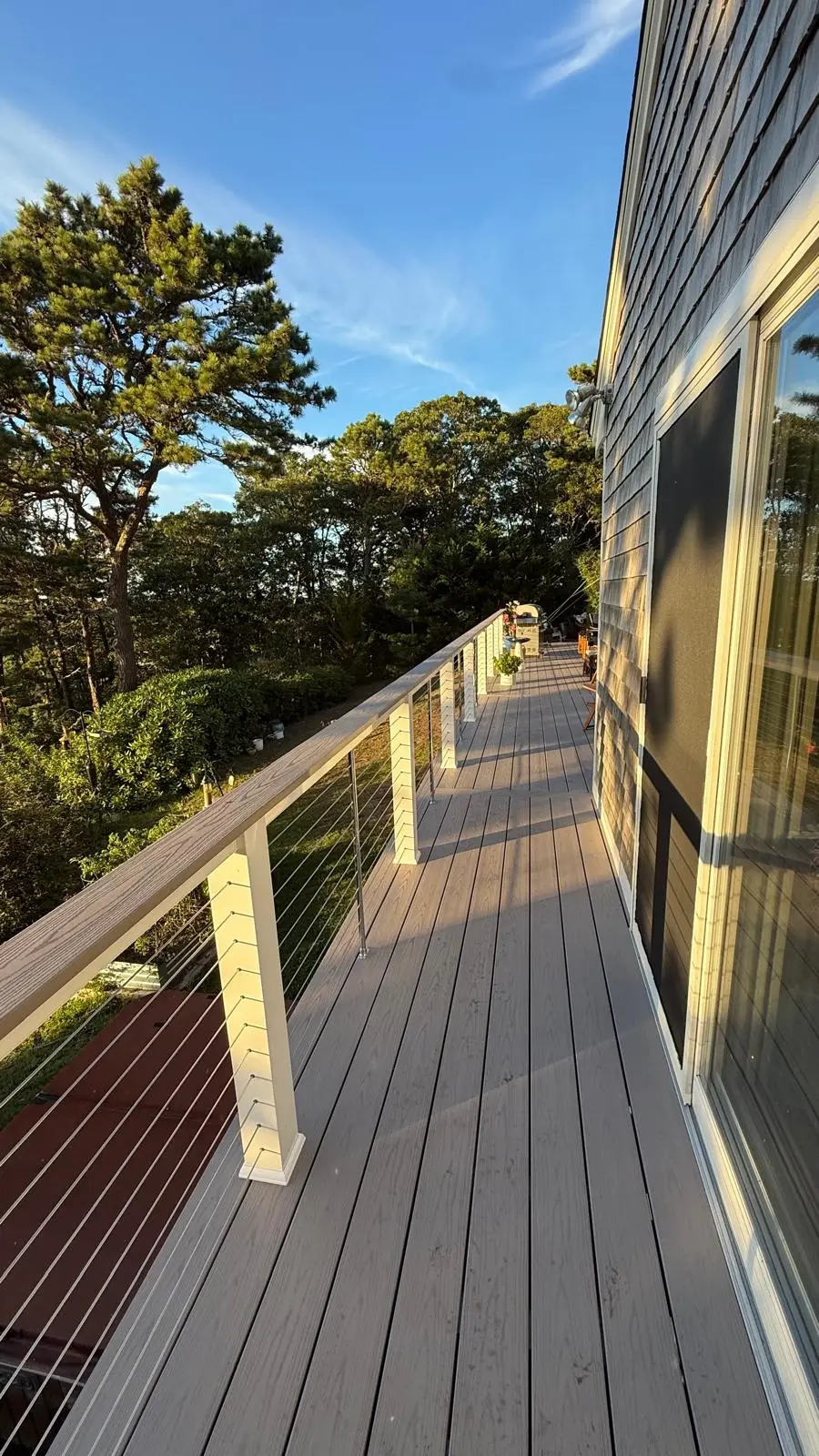
The railing is the part of a deck people see first. It shapes the whole look of the deck from the yard and from inside the house, it decides how much of the view you keep, and it is the main safety feature between your family and the ground. It is also one of the biggest line items on a deck estimate.
On Cape Cod, three railing styles come up in nearly every conversation: white vinyl, cable, and black aluminum balusters. This guide compares them on look, maintenance, salt air durability, views, code requirements, and typical cost, so you can choose the one that fits your home.
White vinyl railing: the Cape Cod classic
White vinyl railing is the most common choice on Cape homes, and it is easy to see why. It matches the white trim on shingle style houses, never needs paint, does not rot, and handles salt air without rusting. Most systems come with posts that slide over a structural post, top and bottom rails, and balusters that click into place.
Vinyl is usually the most budget friendly of the three. The trade-offs are that it blocks more of the view than cable or slim aluminum, can look bulky on a modern home, and needs occasional washing to stay bright white, especially on shaded decks where mildew can form.
Cable railing: open views with a modern edge
Cable railing uses thin stainless steel cables stretched horizontally between posts. From a distance the cables nearly disappear, which makes it a favorite for decks with water views, wooded lots, or a backyard you want to see from the kitchen window. It gives a clean, modern look that pairs well with composite decking.
Cable is usually the most expensive option per linear foot, and it is more technical to install. Posts must be strong enough to resist the high tension, cables need occasional re-tensioning, and the stainless hardware should be a grade suited for coastal use and cleaned now and then to prevent surface staining from salt.
Some homeowners also worry about kids climbing horizontal cables. Code rules apply to cable systems just like any other railing, and the spacing and tension have to meet them.
Black aluminum balusters: the in-between
Black aluminum balusters have become very popular on Cape Cod in recent years. Slim round or square balusters in black let more view through than vinyl, look sharp against white or composite top rails, and do not rust. They can be paired with composite or vinyl posts and rails for a custom mix, like white posts with a composite top cap and black balusters.
Cost usually falls between vinyl and cable. Powder coated aluminum holds up well, but scratches should be touched up so the finish keeps protecting the metal near the ocean.
Code basics every railing must meet
Massachusetts follows the State Building Code, which sets rules for guards on decks above a certain height off the ground. Among other things, guards must reach a minimum height, openings must be small enough that a small sphere cannot pass through, and the whole guard must resist a specific load. Stairs need graspable handrails.
The structure underneath matters as much as the railing itself. Railing posts must be fastened to the deck framing with proper blocking and hardware, not just a few screws into the rim. Wobbly railings on older decks almost always come down to weak post connections. Your local building department checks the railing at the final inspection.
Typical cost ranges
Railing is priced by the linear foot, and the market ranges vary widely by product. As a rough guide, vinyl railing installed often runs somewhere in the lower range per linear foot, black aluminum balusters with composite or vinyl rails sit in the middle, and cable railing typically lands at the top, sometimes double or more the cost of vinyl.
Stair railings, corners, gates, post caps, lighting, and drink rail tops add to the total. Because railing can be a big share of the deck budget, many homeowners use a premium style where it matters most, such as the side facing the view, and a simpler style elsewhere.
These are general market ranges, not a quote. The exact number depends on the total length of railing, the number of stairs and corners, and the system you choose, which is why a free on-site estimate is the fastest way to compare options for your own deck.
How to pick the right railing
Start with the view. If you have water, marsh, or woods worth seeing, cable or black aluminum keeps it open. If the deck faces a neighbor or a road, white vinyl adds privacy and a classic look. Then think about style: traditional Cape and shingle homes suit white vinyl, while newer homes and modern renovations often suit cable or black balusters.
Finally, consider upkeep and budget. Vinyl is the easiest on both. DFA Carpentry builds decks with white vinyl railing, cable railing, and black balusters, and can show you real examples during a free estimate so you can see how each one looks in person.
Frequently asked questions
- What is the most low maintenance deck railing?
- White vinyl and powder coated aluminum are both very low maintenance. Vinyl needs an occasional wash, and aluminum may need finish touch ups if scratched.
- Does cable railing rust near the ocean?
- Stainless steel cable rated for coastal use resists rust, but salt can leave surface stains. Rinsing and cleaning the cables and fittings now and then keeps them looking good.
- Can I mix railing styles on one deck?
- Yes. A common approach is cable or black balusters on the view side and white vinyl elsewhere, or white posts and rails with black aluminum balusters for contrast.
- How tall does a deck railing need to be in Massachusetts?
- The State Building Code sets minimum guard heights for decks above a certain height from the ground. Your builder and local building department will confirm the exact requirements for your deck.
- Can I replace just the railing on my existing deck?
- Often, yes, if the deck framing is sound and the new posts can be properly fastened. A builder should check the rim and joists where the posts attach.
Related services
Ready for an exact price?
Get a free, no-pressure in-home estimate. Real numbers for your home, not a phone guess.