
7 Signs Your Deck Needs to Be Replaced (Not Just Repaired)
· By Daniel Ferreira
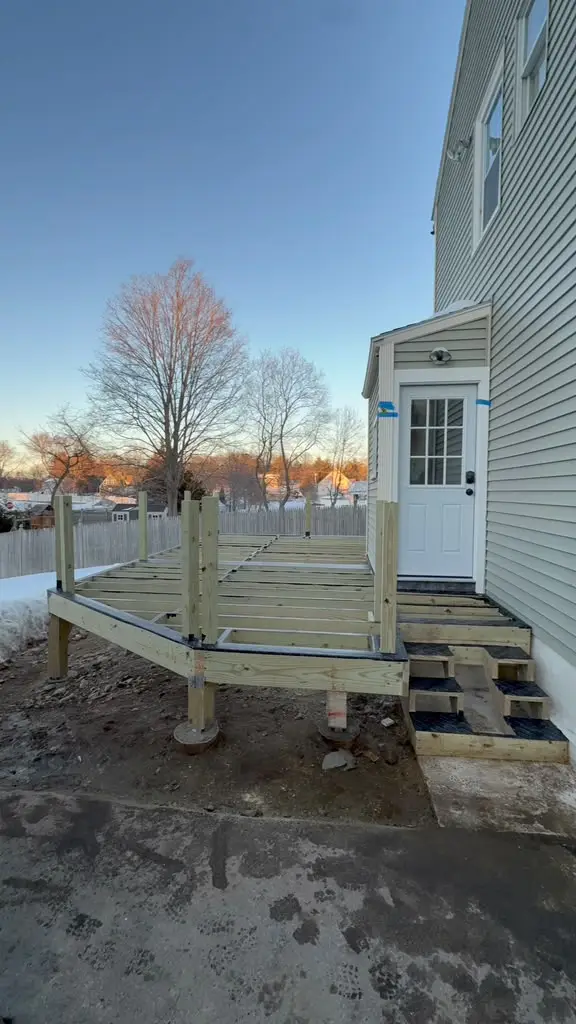
Decks age quietly. From the yard, an old deck can look fine for years while the parts that hold it up slowly rot, rust, or pull away from the house. On Cape Cod, salt air, moisture, sandy soil, and freeze and thaw cycles speed that process up.
Some problems are cheap fixes. Others mean the structure is no longer safe and the deck should be rebuilt. Here are the seven signs a builder looks for, what each one means, and when repair stops making sense. If you notice any of the structural signs below, keep people off the deck until it is checked.
1. The ledger board is rotting or pulling away
The ledger is the board that attaches the deck to your house, and it is one of the most common points of failure. If water gets behind it because of missing or failed flashing, it rots the ledger and can rot the rim of the house too. Look for dark stains, soft wood, rust streaks, gaps between the ledger and the house, or a deck that seems to be leaning away.
Many older decks were attached with nails alone instead of proper bolts or structural screws. A failing ledger is a safety issue, and fixing it usually means taking the deck apart in that area anyway, which is why it often leads to a full replacement.
2. Footings are sinking, cracked, or too shallow
If the deck has settled, tilts, or bounces more than it used to, look at the footings and posts. Older decks were sometimes built on blocks sitting on the ground or on shallow footings above the frost line. Those move every winter as the ground freezes and thaws.
Correcting footings means supporting the deck, digging new footings to the depth your town requires, and reinstalling posts and beams. On an older deck, that work often costs close to what a new structure would.
3. Soft, spongy, or rotting wood
Push a screwdriver into joists, beams, and posts, especially near the ground, at the ends of boards, and anywhere water collects. If it sinks in easily or the wood crumbles, there is rot. A few soft deck boards can be swapped, but rot in the joists, beams, or posts means the structure is compromised.
Rot tends to spread from one wet spot to the next, so where you find one problem there are usually more hidden under the decking.
4. Wobbly or loose railings
Grab the railing and push. It should feel solid. If posts move, rails are loose, or balusters are missing or spaced too far apart, the guard is not doing its job. Railings on older decks are often attached with a few nails into rotting rim boards, which is why they fail when someone leans on them.
Current code requires guard rails at a minimum height on decks above a certain distance from the ground and limits the gap between balusters. A deck that does not meet those standards is a real fall risk, especially for children.
5. Rusted or missing hardware
Joist hangers, bolts, screws, and post bases hold the frame together. In salt air, hardware that is not rated for coastal use or for treated lumber can rust away within years. Look for heavy rust, flaking metal, missing hangers, or joists held up by a couple of nails.
Replacing a few hangers is simple. If rust is everywhere, it usually means the original build used the wrong materials and the whole frame deserves a closer look.
6. Stairs that shift, sag, or feel uneven
Stairs take a beating and often fail before the rest of the deck. Watch for stringers that are cracked or rotting at the bottom, treads that flex, steps of different heights, and missing handrails. Uneven step height is one of the most common trip hazards around a home.
7. The deck is simply at the end of its life
Even a well kept wood deck has a lifespan, commonly somewhere around 15 to 25 years depending on materials and care. If your deck is in that range and you are already replacing boards, patching railings, and fighting rot every year, you are paying to maintain a structure that will need replacing soon anyway.
Replacement is also a chance to upgrade: switch to low maintenance composite, add wider stairs, a second level, a pergola, or an outdoor shower, and get a deck built and permitted to today's Massachusetts State Building Code.
Repair or replace: how to decide
A simple rule of thumb: surface problems (a few boards, a loose baluster, a stain job) are repairs. Structural problems (ledger, footings, joists, beams, posts) usually point to replacement, especially if more than one shows up at once. A builder can open up a few spots and tell you which one you are dealing with.
DFA Carpentry offers free on-site estimates, and Daniel Ferreira will walk the deck with you, show you what he finds, and explain honestly whether repair makes sense or not.
Frequently asked questions
- How long does a wood deck last on Cape Cod?
- Many pressure-treated decks last somewhere around 15 to 25 years with regular care. Salt air, shade, poor drainage, and skipped maintenance can shorten that.
- Can I keep the old frame and just replace the boards?
- Only if the frame, ledger, and footings are sound and meet current spacing requirements for the new boards. A builder should inspect the structure before you invest in new decking.
- How often should I have my deck checked?
- A quick look every spring is a good habit: check the railings, stairs, ledger area, hardware, and any wood near the ground. If the deck is over 15 years old or shows any of the signs above, have a professional look at the structure.
- Is a bouncy deck dangerous?
- Some bounce can come from joists that are undersized or spaced too far apart, which is not always dangerous, but sudden new bounce or movement can signal rot or failing connections. Have it inspected.
- Does a deck replacement need a permit?
- In Massachusetts, replacing a deck structure almost always needs a building permit. DFA Carpentry handles the permits personally.
Related services
Ready for an exact price?
Get a free, no-pressure in-home estimate. Real numbers for your home, not a phone guess.